Happiness as a By-Product: An Interview with Jessa Crispin, Founder of Bookslut.com

Back in August of 2009, Jessa Crispin, the founder of Bookslut.com (I wrote a comics column for them for a year) posted a short essay on The Smart Set about writing and the writing life that referenced Booklife, largely in a negative sense. This caused me quite a bit of anguish, to be honest. It’s one thing to get a negative review on a novel; it’s quite another to think, even for a second, that you might have written something actively harmful to people.

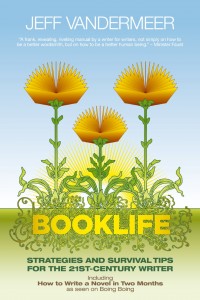
I intended Booklife as a helpful guide that combined advice on how to navigate your way through the myriad of potentially distracting and useless tools and opportunities provided by the internet with modern advice on a host of more personal issues related to writing and being a writer, based on 25 years of experience. Crispin saw it at least in part as potentially manipulative or cynical, and placed it in the context of the many new “get-rich-quick” books that detail how to do internet marketing and the like.

After a more careful examination of her essay, however, I came to the conclusion that a difference in defining terms like “contact” might be part of the problem–that, in fact, whether you were to call someone a “contact” or an “ally,” the same points applied: in all of your dealings with other people, whether about your work or generally, be a sincere human being.

Of course, there’s also the uncomfortable truth that no one is ever going to perceive your book exactly the way that you intended for it to be perceived. In coming into contact with the world the text changes, given an additional dimension by readers. Nor do I think Booklife is perfect–part of the point of the book is to continually test it, to not only use it but to also define yourself as a writer by what you disagree with in the text.

That said, I decided it would be interesting to interview Crispin about issues related to the modern writer’s life and Booklife. The results are great—rock-solid advice and insight.

At least one of her answers deserves special emphasis, since I think it’s becoming a major problem in the largely hierarchy-blind world of the internet: “I do worry a little that the modern age has taken the failure stage out of the creative process. Now if you can’t get your manuscript published, it’s because the publishers are cowards, can’t see your genius, and you can self-publish it (and then send out slightly crazed emails to critics). There is a lack of humility, a failure to recognize that getting knocked on your ass is actually good for you.”

There’s also nothing in her answers that I would disagree with; indeed, there’s nothing in Booklife that would intentionally contradict the idea of focusing on the craft and art of fiction over the need to promote your work. Does that mean I won’t be making some changes in the second edition? Not at all, and one of those changes will be to add an introduction to the Public Booklife section that references Crispin’s Smart Set essay, and makes doubly or triply clear the context in which I am providing that information.

So, without further preamble, an interview with Jessa Crispin—with sincere thanks to her for doing the interview.

Continue reading

E-Books and Issues of Entitlement

By now, it’s unlikely you haven’t heard of the dispute between Amazon and Macmillan. That dispute and its resolution is important, but a larger issue has come to light: namely the sense of entitlement some readers have with regard to getting e-books dirt-cheap. Part and parcel of this attitude is a basic misunderstanding of the breakdown of costs associated with publishing a book.

For example, one of the biggest faux bits of logic I’ve been seeing is that “If the mass market paperback is $7.99, why can’t I get the e-book version from the get-go at that price?” Well, the fact is $7.99 for mass market paperbacks only works if you’re printing tons of books. It’s also important to note that many authors never get their books published in mass market format because the publishers rightly have estimated that based on hardcover and trade paperback sales, that particular book won’t sell enough copies in mass market. So they don’t reach the $7.99-a-book threshold, which includes the print-a-crapload-of-copies threshold.

Other examples show a basic misunderstanding of distribution, or of the fact that the actual physical printing of a book is a fraction of the cost of producing a book.

But what I find most inexplicable is the level of venom directed by some readers at publishers, and by extension writers, like some kind of scam is being perpetrated upon them. It’s especially ironic given that the book industry is usually dealing in unit sales of an individual book of under 20,000 copies, whereas other forms of entertainment like movies and music are dealing in unit sales of over 100,000 copies. In other words, there’s not much room for price discounts.

What’s led to this sense of entitlement? Here are some possible factors, beyond the basic fact of there being lots of free content on the internet.

—The proliferation of free book downloads offered by publishers and writers.

—The constant attacks on copyright, and thus the overall idea of “ownership”, on highprofile blogging platforms and websites.

—General attacks on software limiting a user’s ability to copy an e-book, especially attacks that don’t do so in the context of respect for the creator’s wishes or need to make money from their work.

—Deep discount pricing of e-books by entities like Amazon to encourage the sale of e-books.

—Google’s book scanning project, which, under the guise of “fair use”, has made significant portions of hundreds of thousands of books available online with no regard for the rights of the writers of those books.

Have these factors led to this sense of entitlement? I don’t know, but it’s worth thinking about. It’s also worth noting that we often cause problems for ourselves as authors by thoughtlessly adopting whatever hot new media idea pops up on the internet. In some cases, I think we begin to contribute to our own disenfranchisement in doing so.

If this sense of reader entitlement proves to be pervasive or becomes the norm, then writers will be in a tough position, and the only way to make money on e-books will be to retain the rights yourself and self-publish–meaning you will also have to become your own editor, your own typesetter, your own distributor, etc.

Although you can self-publish more easily today than in the past, it’s not going to help you that much unless you are a celebrity like Wil Wheaton, someone with an existing high-profile platform like John Scalzi or Cory Doctorow, someone who is already a bestselling author, or unless you are prepared to basically become your own publishing house (involving a series of skillsets that most people don’t have).

In such a scenario, if e-books do eventually dominate the marketplace and physical books have only a fraction of their current market share, it’s entirely possible that unless this situation resolves itself into a compromise whereby readers actually show respect for the creators of the stories they love that we will see one of the largest mass extinctions of published writers in the history of literature. They’ll still be writing–but they’ll be largely invisible, and also unable to even dream of writing full-time.

My feeling is that it won’t get that bad, but we as writers have to do our best to make sure it doesn’t–by educating readers and doing our part as writers to make sure that our actions don’t contribute to the problem.

(For the best series of posts on the subject, including the Amazon-Macmillan fracas, visit Jay Lake’s livejournal.)

Good For Your Booklife: In Praise of Indie Bookstores

One thing about my recent five-week book tour behind Finch and Booklife that I particularly loved was getting to read in so many great independent bookstores. Indies are extremely important to the well-being of book culture and often serve as strongholds for author events. This month, Indiebound has listed Finch as one of its Indie Notables, something I’m very proud of.

You can find some longer descriptions of indies in my book tour reports for Omnivoracious, but below the cut I’ve written downpersonal impressions of the indie bookstores I visited during the tour–including some little-known facts about each. A huge thanks to each and every one of them.

I’m also rolling out the new Finch negative campaign ad video (see above). Friends and fans from all over the world contributed to the video. After some bugs in moviemaker, Matt Staggs stepped in to finish it, including doing the voice-over. If you like the book, please feel free to post the video and a link to Indiebound this month, along with your own praise of the indies. Thanks.

Continue reading

The Perils of Success for Writers


(Always remember to celebrate your writing success…just don’t lose your head. Photo by Jeremy Tolbert.)

Success can be as difficult for a writer as managing feelings of despair at not being successful. For one thing, if your goal was to publish a novel with a major commercial publisher and you’ve suddenly achieved that goal after years of work…what do you do next? You may not have thought past that point, and thus feel at loose ends, drifting, at the very moment when most people think you should be celebrating. Or, you may have spent so much time expecting the worst and having to push up against gatekeepers and other obstacles…that the lack of an obstacle makes you stumble. You literally don’t know what to do without an obstacle in your path. It throws off your balance. Finally, success may go to your head and you may behave like a coked-up rock star for a few months, until reality hits you in the face.

One child prodigy I know had four novels out from Bantam by her early twenties but by the age of twenty-five had literally joined a circus and disappeared into Eastern Europe, never to return — as an author, at least. Another writer achieved great commercial success at the expense of mental health, ever more erratic in emails and face-to-face meetings, and eventually became a recluse. A third writer got a huge deal for three books and, with his day job as an anchor, proceeded to adopt an arrogant attitude, and blow almost all of the money on clothes, books, travel, and thirteen pairs of very
expensive shoes.

Failure’s easy — wrecking your life, not living up to your talent, can be accomplished painlessly over years, or even over the course of an afternoon if you really put your mind to it. But once you’re successful, you have real problems: expectations put on you, readers who correspond with you, and responsibilities you could never even imagine while you were typing away in your tiny office, certain no one would ever read your words even as you hoped
the opposite would be true.

Even a modicum of success can throw you off of your game, especially if there’s an unfair niggling little voice in the back of your head saying you don’t deserve it. Success is a form of praise, and praise can be hard to take, because it requires acknowledging a form of love. We’re generally not good with love, or being as generous to ourselves as we’re told to be to others.

Here are some of the possible untoward results, of success, sudden or otherwise:

• You quixotically quit your day job based on having won a lottery that you may never win again — namely, the big book advance — and run out of money within a couple of years. (Crawling back is much, much worse than never having left, or going part-time and gradually phasing out the day job once you’re assured of future writing income.)

• You turn into a horrible human being, a premature midlife crisis induced by your sudden change in status, and when you wake up from this delusion, you find the wreckage of your life all around you like an airplane’s burning fuselage. (In this case, you will probably have lost the affection of friends and family members, and possibly even the love of your spouse or partner.)

• You have trouble writing your second book because you’re too enamored of your own work, or because you’ve listened too closely to book reviewers or fans, relinquishing your vision in favor of a belief in theirs.

• You never write another book because you discover you don’t like everything that goes with having an actual career.

Can you avoid these outcomes? Of course — you may be the type of personality that is resistant to all the dangers of success; I don’t mean to suggest these scenarios are inevitable, or even likely. But if you are susceptible, you probably won’t avoid problems because of reading these words, although possibly you can limit their impact.

Alas, success is an emotional rather than intellectual experience. No matter what counsel I give you, you may still get the bends trying to adjust to success. All I can advise is that when success comes, try not to make any sudden changes in your life. Try, no matter how hard it might be, to simply enjoy it and incorporate it into your existing paradigm.

As for me, I was the jerk with thirteen pairs of shoes. They still stare at me from the closet, a Greek chorus shouting “idiot!” every time I walk past them.

>>Test this section of Booklife: What other problems does success bring to writers? What have you experienced?